
Are You Suffering from Tooth Loss? Consider Dental Implants!
Losing teeth due to gum disease can significantly impact your confidence, comfort, and overall health. At My Dentist in Plano, Dr. Darren Dickson and our dedicated team offer a transformative solution: dental implants. These advanced restorations restore the function, aesthetics, and quality of life your smile deserves.
Don’t let past gum disease hold you back from achieving a complete, healthy smile. Our Plano dentist and team are here to guide you. Contact the best dental office near you today by calling (972) 378-9747.
Can You Get Dental Implants After Gum Disease?
At your consultation, we’ll go over the following to ensure that dental implants are best for you and your smile:
- Comprehensive Medical History: We review your medical history for conditions like uncontrolled diabetes or smoking that could affect healing and implant integration. Your safety and successful outcome are our top priorities.
- Current Oral HealthStatus: Our team assesses gum and remaining teeth health, ensuring they’re free from active infection and inflammation. A healthy foundation is paramount to receiving dental implants.
- Jawbone Density Requirements: Sufficient jawbone density is critical for stable implant anchorage. If the bone is inadequate, Dr. Darren Dickson can perform bone grafting to prepare your jawbone.
Addressing Gum Disease’s Impact on Implant Success
A history of gum disease can present unique challenges. Studies indicate higher risks of implant complications if not managed correctly. Dr. Darren Dickson’s expertise and proactive strategies can help mitigate these risks:
- Optimizing Gum Health for Implant Integration: Healthy gum tissue and bone are vital for successful implant integration. Our pre-treatment protocols ensure a pristine oral environment, preventing infected gums from hindering this process.
- Minimizing Risks of Post-Implant Infection: Patients with a history of gum disease face a greater risk of peri-implantitis. Our dentist implements stringent sterilization and provides comprehensive post-operative care to significantly reduce this risk.
- Ensuring Long-Term Success Through Proactive Care: Regular dental check-ups at My Dentist in Plano and excellent home oral hygiene are essential for long-term implant health. We partner with you every step.
Foundational Health: Pre-Implant Periodontal Treatment at My Dentist in Plano
Essential Gum Disease Treatments Before Dental Implant Placement
- Scaling and Root Planing: This deep cleaning meticulously removes plaque and tartar from above and below the gum line, promoting gum health and reducing inflammation.
- Targeted Antibiotic Therapy: For bacterial infections, our dentist in Plano may prescribe specific antibiotic therapies to eliminate bacteria that could compromise the implant site.
- Possible Surgical Interventions: In advanced cases, Dr. Darren Dickson performs surgical procedures like flap surgery or regenerative techniques to restore optimal gum and bone health, creating a stable foundation for implants.
How Periodontitis Treatment Improves Implant Outcomes
By thoroughly treating periodontitis before implant placement, we can significantly improve outcomes.
- Reduced InfectionRisk: Effective periodontal treatment minimizes infection risk, crucial for smooth healing and successful implant integration.
- Improved Bone Health and Stability: Addressing gum disease stabilizes existing bone loss. A healthy gum environment is foundational, even if bone regeneration requires additional procedures.
- Enhanced Healing Post-Surgery: Patients undergoing comprehensive periodontal treatment typically experience better, faster healing and superior implant integration, leading to greater comfort and success.
Bone Grafting and Jawbone Restoration
Why Bone Grafting is Essential After Gum Disease-Related Bone Loss
- Bone Loss Due to Gum Disease: Periodontitis causes progressive jawbone deterioration, leaving inadequate structure to securely anchor implants.
- Consequences of Insufficient Bone: Without adequate bone volume and density, implants may fail to integrate, leading to instability, complications, and failure.
- Benefits of Grafting: Bone grafting procedures restore lost bone volume and density, providing the needed foundation essential for successful, long-term implant placement.
Types of Bone Grafts Utilized for Implant Preparation
| Graft Type | Description | Use Case |
| Autogenous Grafts | Bone taken from the patient’s own body (e.g., from the chin or hip). | Often considered the “gold standard” for maximizing compatibility, promoting natural healing, and achieving predictable results. |
| Allografts | Bone sourced from a human donor, meticulously processed for safety and effectiveness. | A valuable option when extensive grafting is needed, and harvesting autogenous bone is not ideal or sufficient. |
| Xenografts | Bone derived from another species, typically bovine, is also rigorously processed. | Effective for patients who may not have enough donor bone available or prefer a less invasive donor site. |

The Dental Implant Procedure at My Dentist in Plano
Implant Placement Process for Periodontitis Patients
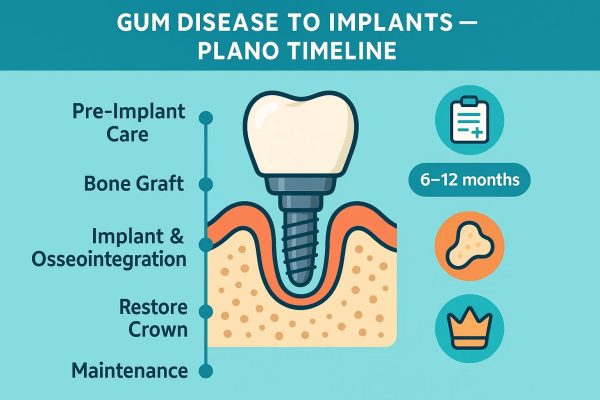
- Initial Consultation & Personalized Planning: Your journey begins with a comprehensive evaluation, including advanced imaging, to assess oral health and determine the most effective, personalized treatment plan. Our implant dentist discusses all options and answers your questions.
- Pre-Implant Periodontal Treatment: Any active gum disease or infection must be thoroughly treated and resolved to create a healthy, stable foundation for the implant. This is a non-negotiable step for long-term success.
- Precise Implant Placement: Dr. Darren Dickson surgically places the dental implant into the jawbone. This titanium post undergoes osseointegration, fusing with your bone over several months, creating a strong, natural anchor.
- Restoration & Follow-Up Care: Once integrated, a custom crown, bridge, or denture is attached. Regular follow-up appointments at My Dentist in Plano monitor healing, ensure proper integration, and maintain your new smile’s health.
Preventing Peri-Implantitis and Ensuring Long-Term Success
Dr. Darren Dickson and our team guide you through proactive steps to prevent peri-implantitis:
- Rigorous Daily Oral Hygiene: Meticulous oral hygiene, including diligent brushing and interdental cleaning around implants, is essential to prevent bacterial buildup and infection. We’ll show you the best techniques and tools.
- Critical Follow-Up Visits: Regular dental check-ups and professional cleanings at My Dentist in Plano are vital. These visits allow our dentist to monitor implant health, detect issues early, and provide preventive care.
- Recognizing Complication Signs: We educate patients on symptoms like swelling, bleeding, persistent discomfort, or pus around the implant site. Early detection and intervention are key.
Supportive Periodontal Care for Optimal Implant Longevity
Our supportive care strategies significantly enhance implant longevity:
- Professional Cleanings for Implants: Our hygienists provide specialized cleanings that maintain gum health around implants and prevent infection, using tools safe for implant surfaces.
- Strategic Antimicrobial Treatments: When appropriate, we may recommend antimicrobial treatments to reduce bacterial load around the implant, often as an adjunct to home care.
- Comprehensive Patient Education: Our team provides thorough education on proper home care techniques, dietary considerations, and lifestyle choices essential for long-term implant success.

Frequently Asked Questions
The dental implant process can vary in duration, especially for patients with a history of gum disease. Initially, you may require periodontal treatment, which can take several weeks to months to ensure your gums are healthy. Once your gums are stable, the implant placement itself typically takes about an hour. After placement, osseointegration (the fusion of the implant with the jawbone) can take several months, followed by the attachment of the crown. Overall, the entire process may take 6 to 12 months.
Maintaining your dental implants involves a combination of good oral hygiene practices and regular dental visits. Brush your teeth at least twice a day and floss daily, paying special attention to the areas around the implants. Additionally, schedule regular check-ups and professional cleanings with your dentist to monitor the health of your implants and surrounding gums. Avoiding tobacco products and maintaining a healthy diet can also contribute to the longevity of your implants.
If you notice any signs of complications after your dental implant procedure, such as swelling, persistent pain, or unusual discharge, it’s essential to contact your dentist immediately. Early intervention can prevent more severe issues, such as infection or implant failure. Your dentist will assess your situation and recommend appropriate treatment to address any complications and ensure the health of your implants.
You Don’t Have to Live with Missing Teeth after Gum Disease
Dental implants offer a reliable solution for restoring your smile after gum disease, enhancing both function and aesthetics. By addressing underlying issues and ensuring a healthy foundation, our expert team at My Dentist in Plano maximizes the success of your implants.
Don’t wait to reclaim your confidence. Schedule a consultation with our Plano implant dentist at(972) 378-9747 to explore your options. Experience the transformative power of dental implants and take the first step towards a healthier smile.